
Retina Treatment in Delhi
The retina is the most delicate, vision-critical layer of your eye — and retinal problems often progress silently until vision is at real risk. At Save Sight Centre, Dr. Rajeev Jain, Senior Retina Specialist, provides comprehensive diagnosis and treatment for the full range of retinal and vitreous disorders, from intravitreal injections to complex vitrectomy surgery.
🔎 Quick Answer: Retina and Uvea Care
The retina is the light-sensitive layer at the back of the eye, and damage to it — from diabetic retinopathy, retinal detachment, macular degeneration, or vitreous disorders — can cause permanent vision loss if not treated promptly. At Save Sight Centre, a NABH and ISO accredited hospital opposite Adarsh Nagar Metro Station, Dr. Rajeev Jain, Senior Retina Specialist with over 25 years of experience and fellowship training from LV Prasad Eye Institute, Sydney Eye Hospital, and Royal Adelaide Hospital, provides complete retina care — from intravitreal injections (₹15,000 onwards per eye) and laser photocoagulation to scleral buckling and vitrectomy surgery (₹40,000 onwards per eye). Sudden flashes, floaters, or a curtain-like shadow in your vision should be evaluated immediately.
Sudden flashes, floaters, or a shadow/curtain in your vision are warning signs of retinal detachment — a medical emergency requiring urgent care.
Dr. Rajeev Jain, Senior Retina Specialist, has 25+ years of experience and trained at LV Prasad Eye Institute, Sydney Eye Hospital, and Royal Adelaide Hospital.
Treatment ranges from intravitreal injections and laser therapy to scleral buckling and vitrectomy surgery, chosen based on your exact condition.
Diabetics should get a dilated retina exam at least once a year, even without symptoms, since diabetic retinopathy often has no early warning signs.
Consultation and diagnostic test charges (OCT, FFA/ICG, B-scan) apply and are confirmed during your evaluation.
Early diagnosis dramatically improves outcomes — many retinal conditions that would otherwise cause permanent vision loss are treatable when caught in time.
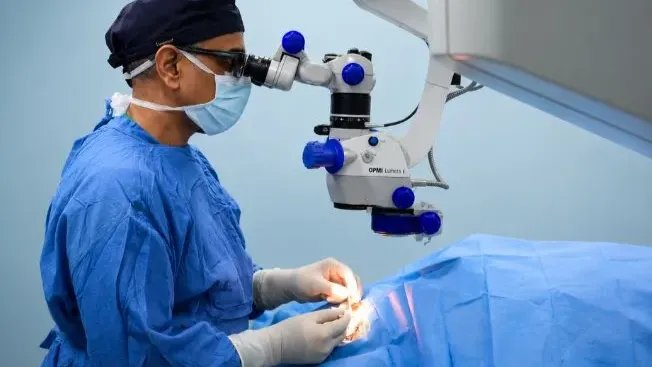
How does Retina and Uvea Care work?
The retina is a thin, light-sensitive layer of tissue lining the back of your eye. It works like the film in a camera — capturing light and converting it into electrical signals that travel through the optic nerve to your brain, where they're processed into the images you see. At its centre is the macula, a tiny but critical area responsible for sharp, detailed central vision — the vision you use for reading, driving, and recognising faces.
The vitreous — a clear, gel-like substance that fills the space between the lens and the retina — also plays a role in retinal health. As we age, the vitreous can shrink and pull away from the retina, sometimes causing tears, bleeding, or detachment.
Because the retina has no ability to regenerate once significantly damaged, retinal conditions are treated as time-sensitive. Unlike a cataract, where the lens can simply be replaced, retinal damage that goes untreated for too long can result in permanent, irreversible vision loss — which is why specialist care and prompt diagnosis matter so much.
Symptoms of Retina and Uvea Care
What Vision Problems Can Retina and Uvea Care Correct?
High blood sugar damages the tiny blood vessels in the retina over time, causing leakage, swelling, and abnormal vessel growth that can threaten vision.
The retina pulls away from the underlying tissue that supports it, cutting off its blood and oxygen supply. Needs urgent surgical treatment to prevent permanent vision loss.
The macula, responsible for sharp central vision, gradually deteriorates with age. Wet AMD progresses faster than dry AMD and needs prompt injection therapy.

A small break forms in the macula, usually due to age-related vitreous traction, causing blurred or distorted central vision that typically needs surgical repair.
A thin layer of scar tissue forms on the retina's surface and can wrinkle or pucker it, distorting central vision. Mild cases are monitored; others need surgery.
A blocked retinal vein causes blood and fluid to leak into the retina, leading to swelling, hemorrhage, and sudden vision changes. Often linked to hypertension or diabetes.
Risk Factors for Retina and Uvea Care
Treatment Options for Retina and Uvea Care
Medication is injected directly into the vitreous cavity to reduce swelling and block abnormal blood vessel growth. Used for diabetic macular edema, wet AMD, and retinal vein occlusion. Starting from ₹15,000 per eye.
A laser seals leaking blood vessels or destroys abnormal ones, used for diabetic retinopathy, retinal tears, and lattice degeneration. Cost depends on the extent of laser required — assessed during consultation.
A gas bubble is injected into the eye to push a detached retina back into place, combined with laser or cryotherapy to seal the tear. Suitable for select smaller, upper retinal detachments. Cost assessed on a case-by-case basis.
A silicone band is placed around the outer eye wall to relieve traction on the retina, helping it reattach. Effective for retinal detachments caused by a retinal tear. Starting from ₹40,000 per eye.
The vitreous gel pulling on the retina is removed, the tear is sealed, and the eye is filled with gas or silicone oil to hold the retina in place. Used for complex or recurrent detachments, macular holes, and vitreous hemorrhage. Starting from ₹40,000 per eye. Learn about vitrectomy →
For severe or recurrent detachments, both techniques are combined — the buckle provides external support while vitrectomy removes internal traction. Cost assessed on a case-by-case basis.
What Tests Are Done Before Retina and Uvea Care?
Optical Coherence Tomography (OCT)
Captures a detailed cross-sectional image of your retina, detecting macular holes, fluid, swelling, and early degeneration that's invisible on a standard exam. Learn about OCT →
FFA & ICG Angiography
A dye is injected into your bloodstream and photographed as it passes through the retinal blood vessels, revealing leakage, blockages, or abnormal vessel growth. Learn about FFA/ICG →
B-Scan Ultrasound
Used when bleeding or a cataract blocks the direct view of the retina — sound waves create an image of the retina's structure and detect detachment even when it can't be seen directly.
Digital Fundus Photography
High-resolution photographs of the retina document its current condition and are compared over time to track disease progression or treatment response.
Amsler Grid Test
A simple grid test that detects distortion or blind spots in your central vision — an early sign of macular disease that patients can also use at home to self-monitor. Learn about the Amsler Grid →
Dilated Fundus Examination
Your pupils are dilated with drops so your specialist can directly examine the entire retina, including its far periphery, for tears, thinning, or early disease.
How Is Retina and Uvea Care Performed Step by Step?
Non-Surgical Treatment — Many retinal conditions, especially diabetic retinopathy, macular degeneration, and small retinal tears, are effectively managed with injections and laser therapy, without the need for surgery.
Intravitreal Injections (Anti-VEGF / Steroid)
Medication is injected directly into the vitreous cavity to reduce swelling and block abnormal blood vessel growth. Used for diabetic macular edema, wet AMD, and retinal vein occlusion. Starting from ₹15,000 per eye.
Laser Photocoagulation (PRP / Focal)
A laser seals leaking blood vessels or destroys abnormal ones, used for diabetic retinopathy, retinal tears, and lattice degeneration. Cost depends on the extent of laser required — assessed during consultation.
Pneumatic Retinopexy
A gas bubble is injected into the eye to push a detached retina back into place, combined with laser or cryotherapy to seal the tear. Suitable for select smaller, upper retinal detachments. Cost assessed on a case-by-case basis.
Surgical Treatment — Recommended for more complex retinal detachments, large tears, or when non-surgical treatment isn't sufficient to protect vision. Performed by Dr. Rajeev Jain using advanced vitreoretinal surgical techniques.
Scleral Buckling Surgery
A silicone band is placed around the outer eye wall to relieve traction on the retina, helping it reattach. Effective for retinal detachments caused by a retinal tear. Starting from ₹40,000 per eye.
Vitrectomy Surgery
The vitreous gel pulling on the retina is removed, the tear is sealed, and the eye is filled with gas or silicone oil to hold the retina in place. Used for complex or recurrent detachments, macular holes, and vitreous hemorrhage. Starting from ₹40,000 per eye.
Combined Buckle + Vitrectomy
For severe or recurrent detachments, both techniques are combined — the buckle provides external support while vitrectomy removes internal traction. Cost assessed on a case-by-case basis.
Recovery Timeline After Retina and Uvea Care
What Should You Avoid After Retina and Uvea Care?
Air Travel with a Gas Bubble
Never fly until your surgeon confirms the gas bubble has fully dissolved — altitude changes can dangerously raise eye pressure.
Heavy Lifting & Straining
Avoid strenuous activity and heavy lifting for at least 2–4 weeks, as straining can raise pressure inside the eye.
Skipping Positioning Instructions
If advised to keep a specific head position, follow it closely — this keeps the gas bubble correctly placed against the healing retina.
Rubbing Your Eyes
Avoid touching or rubbing the operated eye, which can disturb healing tissue and increase infection risk.
Swimming & Water Exposure
Avoid swimming pools and exposing the eye to unclean water for at least 4–6 weeks to prevent infection.
Vitrectomy vs Scleral Buckling: Which Retina Surgery Is Right for You?
Both are effective surgical techniques for retinal detachment, but they work differently and suit different types of cases.
| Feature | Retina and Uvea Care | Scleral Buckling | Vitrectomy |
|---|---|---|---|
| How It Works | Internal removal of vitreous traction | External band supports the eye wall | |
| Best For | Complex, large, or recurrent detachments | Simple detachments from a single tear | |
| Approach | Direct access to the back of the eye | No internal eye surgery required | |
| Recovery | May take longer, especially with gas/oil fill | Generally quicker visual recovery | |
| Combination | Can be combined with scleral buckle | Can be combined with vitrectomy |
How It Works
Best For
Approach
Recovery
Combination
What Are the Risks and Side Effects of Retina and Uvea Care?
Blurred Vision During Healing
Vision is often blurry in the initial weeks after surgery, especially with a gas bubble in place, and gradually clears as the eye heals.
Cataract Progression
Vitrectomy can accelerate cataract formation, particularly in older patients. This is manageable with standard cataract surgery later if needed.
Elevated Eye Pressure
Gas or oil used to hold the retina in place can occasionally raise eye pressure temporarily, which is monitored and managed with medication.
Re-Detachment
In a small percentage of cases, the retina can detach again, requiring further treatment. Risk varies by the complexity of the original detachment.
Infection or Bleeding
As with any intraocular surgery, infection or bleeding is possible but rare at accredited centres with strict sterile protocols and post-op care.
Retina Treatment Cost in Delhi
Retina treatment cost varies significantly depending on your exact diagnosis and the complexity of the procedure needed. Here's a transparent overview of starting prices at Save Sight Centre:
| Retina Treatment | Starting Price (Per Eye) |
|---|---|
| Intravitreal Injection (Anti-VEGF / Steroid) | ₹15,000 onwards |
| Laser Photocoagulation (PRP / Focal) | On assessment |
| Pneumatic Retinopexy | On assessment |
| Scleral Buckling Surgery | ₹40,000 onwards |
| Vitrectomy Surgery | ₹40,000 onwards |
| Combined Buckle + Vitrectomy | On assessment |
Retina Treatment Cost in Delhi
Doctors for Retina and Uvea Care
Dr. Rajeev Jain
Senior Retina Specialist with 25+ years of experience treating patients at Save Sight Centre.
Frequently Asked Questions About Retina and Uvea Care
Ready to Book Your Retina and Uvea Care Consultation?
Book your consultation at Save Sight Centre, Delhi. Our expert team will help you understand your condition, recommend the right treatment and guide you through every step.