
Myopia Control Clinic in Delhi
Childhood myopia is rising sharply — and once it starts, it typically keeps progressing year after year unless actively managed. At Save Sight Centre's Myopia Clinic, Dr. Anuraag Gandhi and our pediatric eye care team offer proven myopia control options — atropine drops, myopia control lenses and glasses, and Ortho-K — to slow progression and protect your child's long-term eye health.
🔎 Quick Answer: Myopia Clinic
Myopia control is a set of treatments designed to slow down — not reverse — the progression of nearsightedness (myopia) in children, protecting them from developing high myopia and its associated future eye risks. At Save Sight Centre's myopia clinic in Delhi, options include low-dose atropine eye drops (used nightly for children aged 5–18), myopia control lenses and glasses using peripheral defocus technology, myopia control contact lenses (multifocal design), and Orthokeratology (Ortho-K) overnight lenses. Myopia cannot be reversed, but with consistent treatment, its progression can be significantly slowed, reducing your child's final power and long-term eye health risk.
Myopia affects roughly 1 in 2 people worldwide and is becoming more common in children, linked to reduced outdoor time and increased near work.
Myopia control cannot reverse existing myopia — the goal is to slow how fast it worsens, protecting your child's eyes long-term.
Four proven methods exist: low-dose atropine drops, myopia control (peripheral defocus) lenses and glasses, myopia control contact lenses, and Ortho-K.
Higher (uncontrolled) myopia raises the future risk of cataract, glaucoma, and retinal detachment — which is why early control matters.
Outdoor time and reduced screen time are simple, evidence-linked habits that support any myopia control treatment.
Regular monitoring — including axial length measurement — tracks whether treatment is actually slowing progression.
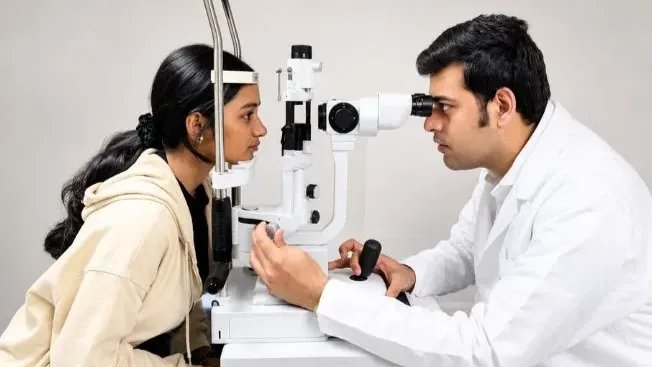
How does Myopia Clinic work?
Myopia (nearsightedness) happens when the eyeball grows too long from front to back, or the cornea is too steeply curved, causing distant objects to look blurry. Myopia usually begins in childhood and, left unmanaged, typically keeps progressing — the eye keeps growing and the power keeps increasing — until early adulthood.
Myopia control is different from simply correcting myopia with glasses. Regular glasses or contact lenses correct blurry vision but don't slow down the underlying progression. Myopia control treatments — specialised lenses, contact lenses, or medicated eye drops — are specifically designed to slow how fast the eye continues to lengthen, aiming to keep your child's final adult prescription lower than it would otherwise be.
This matters because higher levels of myopia (high myopia) are linked to a greater lifetime risk of serious eye conditions like retinal detachment, glaucoma, and cataract. Slowing progression during childhood is one of the most effective ways to reduce these future risks — myopia control cannot reverse or cure myopia, but it can meaningfully change your child's long-term eye health trajectory.
Risk Factors for Myopia Clinic
Treatment Options for Myopia Clinic
A single low-dose atropine drop is placed in each eye every night at bedtime, typically for a course of 2–3 years, for children between 5 and 18 years old. Doctors believe the drops may help prevent the eye from lengthening excessively, though the exact mechanism isn't fully understood. Side effects at low doses are generally mild and may include redness or itchiness around the eye. Some children may experience mild light sensitivity or difficulty focusing up close, since atropine temporarily affects the eye's focusing muscle.
- Atropine therapy requires consistent nightly use and regular monitoring visits to track how well it's working and adjust the treatment plan as needed.
These look like a dartboard when viewed closely — the centre zone corrects clear distance vision as usual, while the outer zones are designed to focus light slightly in front of the peripheral retina. This peripheral "myopic defocus" is believed to signal the eye to stop growing as fast.
Working on the same defocus principle, these daily multifocal contact lenses are worn by children typically aged 6–12. They may help children whose parents are nearsighted and whose own myopia is actively progressing, though results vary by individual.
- Both options require your child to be able to wear and care for the lenses correctly. Contact lenses in particular carry a risk of corneal infection if not cleaned and handled properly, so training and supervision matter.
Types of Myopia Clinic
Low-dose atropine drops are placed in the eye nightly. Used for 2–3 years, they may slow the eye from lengthening too much, though doctors don't fully know the exact mechanism.
Special spectacle lenses correct central distance vision while deliberately defocusing peripheral vision, a design shown to help slow eye growth in many children.
"Multifocal" daily contact lenses use a dartboard-like design — a central zone corrects distance vision while outer rings defocus peripheral vision to help limit eye growth.
A specialised rigid lens worn overnight temporarily reshapes the cornea, giving clear daytime vision without glasses, while also helping slow myopia progression.
What Tests Are Done Before Myopia Clinic?
Comprehensive Refraction Test
Precisely measures your child's current myopia power in each eye, forming the baseline against which future progression is measured.
Axial Length Measurement
Measures the actual length of the eyeball — the most direct way to track true myopia progression, since axial elongation is what drives worsening myopia.
Cycloplegic Refraction
Uses dilating drops to temporarily relax the eye's focusing muscles, giving the most accurate possible measurement of your child's true refractive error.
Corneal Topography
Maps the curvature of the cornea in detail, important for fitting Ortho-K or specialty contact lenses accurately.
Dilated Fundus Examination
Examines the retina and optic nerve directly, ruling out other eye conditions and establishing a baseline retinal health record, especially important in higher myopia.
Family & Lifestyle History
Reviewing parental myopia, screen time habits, and outdoor time helps tailor the most suitable myopia control approach for your child.
How Is Myopia Clinic Performed Step by Step?
Optical Methods (Lenses) — Myopia control glasses, contact lenses, and Ortho-K all work by changing how light focuses on the peripheral retina, without any medication involved.
Myopia Control Glasses
The simplest option to start with — no lens insertion or removal needed, making it easy for younger or less independent children to manage daily.
Myopia Control Contact Lenses
Daily disposable lenses suited to slightly older, more responsible children comfortable with contact lens wear and care.
Ortho-K Lenses
Worn only overnight, giving clear daytime vision without any glasses or lenses during waking hours — appealing for sports-active children.
Pharmacological Method (Drops) — Low-dose atropine drops work through a different biological pathway and can be used alongside optical correction (regular glasses) at the same time.
Simple Nightly Routine
Just one drop per eye at bedtime — no lens handling required, which some families find easier to manage consistently.
Can Be Combined
Atropine drops can often be used together with regular glasses or myopia control lenses for a combined treatment approach in appropriate cases.
Requires Prescription Monitoring
Since atropine temporarily affects near focusing, some children may need reading glasses alongside treatment, monitored by your specialist.
Recovery Timeline After Myopia Clinic
What Should You Avoid After Myopia Clinic?
More Outdoor Time
Encourage at least 1–2 hours outdoors daily — one of the most consistently supported ways to help limit myopia progression.
Limit Screen Time
Balance digital device use with regular breaks and outdoor activity to reduce near-work strain on developing eyes.
Consistent Drop/Lens Use
Myopia control only works with consistent daily use — skipped drops or lens days reduce its effectiveness.
Good Reading Light
Ensure adequate lighting during reading and near work to reduce unnecessary additional eye strain.
Keep Follow-Ups
Regular monitoring visits are how your specialist confirms treatment is working and adjusts the plan as your child grows.
What Are the Risks and Side Effects of Myopia Clinic?
Higher Final Prescription
Without control, myopia typically keeps worsening through the teenage years, resulting in a higher final power and greater lifelong dependence on strong correction.
Retinal Detachment
High myopia is associated with a meaningfully increased lifetime risk of retinal detachment, since a longer eyeball puts extra stress on the retina.
Glaucoma
People with high myopia have a higher risk of developing glaucoma later in life compared to those with normal or well-controlled refractive error.
Cataract
High myopia is also linked to an increased likelihood of developing cataract earlier than would otherwise be typical.
Myopic Maculopathy
In severe, high myopia, progressive stretching of the retina can damage the macula over time, potentially affecting central vision later in life — another reason early control matters.
Myopia Control Glasses Price and Other Treatment Costs in Delhi
Cost varies depending on which myopia control method you choose and the specific lens or lens brand recommended for your child:
| Myopia Control Option | Cost |
|---|---|
| Myopia Progression Assessment (Refraction + Axial Length) | Consultation charges apply |
| Myopia Control Glasses (Spectacle Lenses) | On assessment |
| Myopia Control Contact Lenses | On assessment |
| Ortho-K Lenses | On assessment |
| Low-Dose Atropine Drops (per course) | On assessment |
Myopia Control Glasses Price and Other Treatment Costs in Delhi
Doctors for Myopia Clinic
Dr. Anuraag Gandhi
Dr. Anuraag Gandhi leads the Myopia Clinic at Save Sight Centre, with over 8 years of dedicated experience managing childhood eye conditions, including progressive myopia. He completed his fellowship in Paediatric Ophthalmology and Adult Strabismus from the world-renowned Aravind Eye Hospital, Tamil Nadu, and takes a gentle, compassionate approach with young patients.
Frequently Asked Questions About Myopia Clinic
Ready to Book Your Myopia Clinic Consultation?
Book your consultation at Save Sight Centre, Delhi. Our expert team will help you understand your condition, recommend the right treatment and guide you through every step.