
Eye Twitching: Causes, Symptoms, Treatment & When to Worry
That sudden, uncontrollable flutter in your eyelid — medically called myokymia — is something almost everyone experiences at some point, and it's usually completely harmless. But persistent or spreading twitching can occasionally point to something that genuinely needs a specialist's opinion. Here's how to tell the difference.
Quick Answer
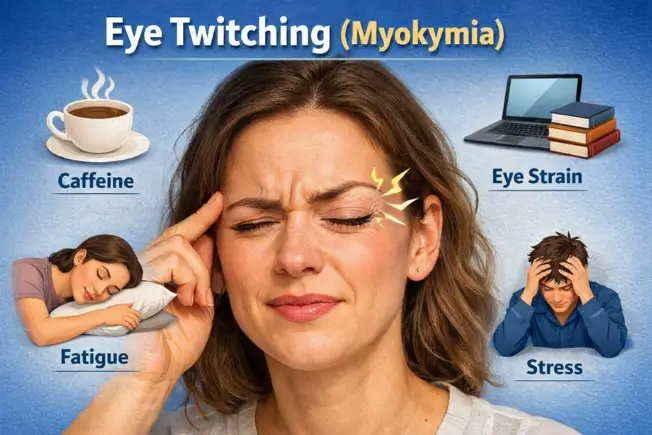
Eye twitching (eyelid myokymia) is an involuntary, repetitive spasm of the eyelid muscles, most often triggered by stress, poor sleep, caffeine, digital eye strain, or dry eyes. It's usually harmless, affects one eyelid, and resolves within days once the trigger is addressed. In rarer cases, persistent twitching that spreads to both eyes or other parts of the face can signal benign essential blepharospasm or hemifacial spasm — conditions that need a proper eye or neurological evaluation rather than home remedies. Most everyday twitching responds well to better sleep, less caffeine, stress management, and lubricating eye drops.
Key Takeaways
- Ordinary eye twitching (myokymia) is a brief, harmless flutter usually caused by stress, fatigue, caffeine, or eye strain.
- It typically affects one eyelid and resolves within days to weeks once the underlying trigger is addressed.
- Benign essential blepharospasm and hemifacial spasm are distinct, less common conditions that need medical evaluation, not home remedies.
- Twitching lasting more than 1-2 weeks, spreading to other facial muscles, or fully closing the eyelid is a signal to see a specialist.
- Rarely, persistent twitching with other neurological symptoms can be linked to conditions like Parkinson's disease or multiple sclerosis.
- Botulinum toxin injections are the established treatment for blepharospasm and hemifacial spasm when they don't improve on their own.
Figures reflect general clinical patterns and can vary from person to person.
What Is Eye Twitching?
Eye twitching refers to involuntary, repetitive spasms of the eyelid muscles. It typically affects the upper eyelid, though the lower eyelid can also twitch. These spasms occur suddenly, last for a few seconds to minutes, and may come and go over several days. In the vast majority of cases, eye twitching is harmless and resolves on its own without medical intervention.
What Causes Eye Twitching?
Stress and Anxiety
Stress is one of the leading causes of eye twitching. When your body is under pressure, it releases hormones that can overstimulate your nerves and muscles, causing twitching. Relaxation techniques like meditation or yoga can genuinely help.
Lack of Sleep
Insufficient sleep strains your eye muscles and nervous system, leading to involuntary spasms. Aim for 7-8 hours a night.
Excessive Screen Time
Long hours on digital devices lead to digital eye strain, which contributes to twitching alongside dry eyes, blurred vision, and headaches.
Caffeine Intake
Too much caffeine — from coffee, tea, energy drinks, or chocolate — stimulates your nervous system and can trigger muscle contractions, including eyelid twitching.
Eye Strain
Reading for long periods, driving, or working in poor lighting conditions can strain your eyes and lead to twitching.
Dry Eyes
Dryness irritates the eyelids and can trigger twitching, especially common in older adults, contact lens users, and frequent screen users. See our guide to dry eye treatment.
Nutritional Factors
Some people report twitching improving with more magnesium in their diet, though the evidence linking magnesium deficiency directly to twitching is more anecdotal than firmly proven.
Alcohol and Smoking
Both alcohol and nicotine affect the nervous system and can increase the likelihood of muscle spasms, including in the eyelids.
What Are the Symptoms of Eye Twitching?
The movement is usually subtle and may not be visible to others, but the person experiencing it can feel it clearly — often described as a rapid flicker or vibration. It's usually painless, though it can feel like a slight tightening, and tends to increase when you're tired or stressed.
What Are the Types of Eye Twitching?
Understanding which type you're dealing with helps determine whether it's harmless or needs medical attention.
Eyelid Myokymia
Most Common, HarmlessMild and temporary, usually triggered by stress, fatigue, or caffeine. Affects one eyelid at a time and resolves once the trigger is addressed. This accounts for the vast majority of eye twitching cases.
Benign Essential Blepharospasm (BEB)
Chronic, Needs EvaluationA neurological movement disorder causing involuntary, sustained closure of both eyelids together — stronger than the gentle flutter of myokymia. It typically begins between ages 40 and 60, is more common in women, and tends to worsen over months to years. Unlike myokymia, it doesn't respond to caffeine reduction or extra sleep. In severe cases, it can force both eyelids shut, affecting reading, driving, and daily tasks.
Hemifacial Spasm
One-Sided, Needs EvaluationInvolves involuntary contractions on just one side of the face, usually starting around the eyelid and gradually spreading to the cheek, jaw, or mouth on the same side. It's typically caused by a blood vessel pressing on the facial nerve, and this one-sided, spreading pattern is what clearly distinguishes it from myokymia and BEB.
Myokymia vs Blepharospasm vs Hemifacial Spasm — At a Glance
| Feature | Myokymia | Blepharospasm | Hemifacial Spasm |
|---|---|---|---|
| Eyes affected | Usually one | Both, together | One side of face |
| Severity | Gentle flutter | Forceful closure | Spreads to cheek/jaw |
| Responds to lifestyle fixes | Yes | No | No |
| Typical course | Resolves in days-weeks | Worsens over years | Progressive |
| Needs specialist care | Rarely | Yes | Yes |
When Should You See a Doctor About Eye Twitching?
Most eye twitching is harmless, but see an eye specialist if:
- Twitching persists for more than 1-2 weeks despite lifestyle changes
- It spreads to other parts of the face — cheek, jaw, or mouth
- Your eyelid fully closes with each twitch, or you have trouble keeping your eye open
- You notice a drooping eyelid alongside the twitching
- It comes with vision changes, pain, or facial weakness
- Redness, swelling, or discharge accompanies the twitching
Can Eye Twitching Be a Sign of a Serious Neurological Condition?
Rarely, yes — and it's worth knowing without becoming alarmed. In a small number of cases, persistent eye twitching has been linked to conditions including Parkinson's disease, multiple sclerosis, Bell's palsy, Meige syndrome, or, very rarely, brain changes from a stroke. The reassuring detail is that these conditions almost always come with other symptoms beyond the eyelid alone — facial weakness, spreading spasms, or other neurological changes — rather than presenting as an isolated twitch. If your twitching is genuinely isolated, brief, and tied to stress, sleep, or caffeine, this is not the likely explanation; it's mentioned here so that persistent, unusual, or spreading symptoms get the proper evaluation they deserve.
What Are the Effective Treatments for Eye Twitching?
Most cases resolve without medical treatment. Depending on the type and severity, here's what helps:
Lifestyle modifications
Reduce stress through deep breathing or physical activity, and maintain a consistent sleep schedule while avoiding screens before bed.
Follow the 20-20-20 rule
Every 20 minutes, look at something 20 feet away for 20 seconds — see our full 20-20-20 rule guide for more detail.
Use artificial tears
Lubricating eye drops relieve dryness and can reduce twitching linked to dry eyes.
Warm compress
A clean cloth dipped in warm water, placed over closed eyes for 10-15 minutes, relaxes eye muscles and improves circulation.
Magnesium-rich diet
Spinach, almonds, bananas, and avocados are worth including as a general health habit, even though the evidence for a direct effect on twitching is more anecdotal than proven.
Botulinum toxin (Botox) injections
The established treatment for benign essential blepharospasm and hemifacial spasm — small injections temporarily relax the overactive muscles, typically giving relief for around 3-4 months before a repeat injection is needed.
Surgery (rare)
For severe, treatment-resistant cases: myectomy (removing some of the overactive eyelid muscle) for blepharospasm, or microvascular decompression — a neurosurgical procedure relieving pressure on the facial nerve — for hemifacial spasm.
What Are the Best Prevention Tips?
- Maintain proper sleep habits — 7-8 hours nightly, on a consistent schedule, with screens off 30-60 minutes before bed
- Manage stress effectively — meditation, short work breaks, and activities you genuinely enjoy
- Take regular screen breaks — the 20-20-20 rule, frequent blinking, and comfortable screen brightness
- Stay hydrated — at least 7-8 glasses of water daily, more in hot weather
- Eat a balanced diet — magnesium (spinach, almonds), vitamin B12 (eggs, dairy, fish), omega-3s (walnuts, flaxseeds)
- Limit caffeine and alcohol — swap for herbal tea or water where you can
How Does a Digital Lifestyle Contribute to Eye Twitching?
In today's screen-heavy world, eye twitching has become increasingly common due to prolonged device use, which reduces your blink rate, increases dryness, and adds to overall eye fatigue. Adjusting screen brightness, using anti-glare glasses, and keeping a proper viewing distance all help reduce this contributing factor.
What Are Common Myths About Eye Twitching?
- "Eye twitching brings good or bad luck." A purely cultural belief with no scientific basis.
- "It always means a serious disease." In most cases, eye twitching is harmless and temporary.
- "Only adults experience it." Children can experience eye twitching too, often from screen time or stress.
Dr. Rajeev Jain, Director, Save Sight Centre
"Almost every patient who comes in worried about eye twitching turns out to have simple myokymia from stress, screens, or poor sleep — and it settles quickly with a few lifestyle changes. What I do want people to know is the handful of signs that mean it's genuinely worth a proper exam: twitching that spreads, that closes the eye fully, or that lasts well beyond a couple of weeks. That's a very different conversation, and it's one we're glad to have early."
Frequently Asked Questions About Eye Twitching
Eye twitching (eyelid myokymia) is usually caused by stress, lack of sleep, excessive screen time, caffeine intake, or eye strain. In rare cases, it may be linked to a neurological condition, but most episodes are harmless and temporary.
Eye twitching typically lasts a few seconds to a few minutes, but it can recur over several days or even weeks if triggers like stress or fatigue continue. Most cases resolve on their own without treatment.
Yes, stress and anxiety are among the most common causes of eye twitching. When your body is under stress, muscles — including those in the eyelids — can spasm involuntarily.
Yes, sleep deprivation is a major trigger. Poor sleep puts strain on your eye muscles and nervous system, increasing the chances of twitching.
In most cases, eye twitching is not dangerous and does not affect vision. However, if it becomes persistent, severe, or spreads to other parts of the face, it may indicate an underlying condition that needs medical evaluation.
Get adequate sleep (7-8 hours), reduce screen time, limit caffeine and alcohol, manage stress through breaks or relaxation techniques, and use lubricating eye drops if dryness is present. Most twitching improves once the trigger is removed.
Ordinary eye twitching (myokymia) is a gentle, brief flutter, usually in one eyelid, that comes and goes with triggers like stress or caffeine. Benign essential blepharospasm is a distinct neurological condition causing stronger, sustained contractions that affect both eyes together, tend to worsen over months to years, and don't improve simply by sleeping more or cutting caffeine.
Rarely, yes. In a small number of cases, persistent eye twitching is linked to conditions like Parkinson's disease, multiple sclerosis, Bell's palsy, or Meige syndrome. These conditions almost always come with other symptoms beyond the eyelid alone, such as facial weakness, spreading spasms, or other neurological changes — which is exactly why persistent or unusual twitching deserves a proper evaluation rather than a guess.
Hemifacial spasm affects only one side of the face, usually starting around the eyelid and gradually spreading to the cheek, mouth, or jaw on the same side. It's typically caused by a blood vessel pressing on the facial nerve. Treatment usually starts with botulinum toxin injections, and in select cases where that isn't enough, a neurosurgical procedure called microvascular decompression can relieve the pressure on the nerve directly.
The evidence here is more anecdotal than firmly established. Magnesium plays a genuine role in nerve and muscle function, so a deficiency is biologically plausible as a contributing factor, and many people report improvement after increasing magnesium-rich foods. That said, it isn't considered a proven, primary cause of eye twitching in the way stress, sleep, and caffeine are, so it's reasonable to try as a general health habit without expecting it to be a guaranteed fix.
Eye Twitching That Won't Go Away?
Get it properly evaluated at Save Sight Centre, Adarsh Nagar, North Delhi. NABH & ISO accredited · 15+ years · 1,70,000+ patients treated.
Disclaimer: The information on this site should not be considered medical advice. Please consult a doctor for an accurate diagnosis and treatment plan. Results may vary from person to person and we do not guarantee similar results for everyone.