

 +91-7873-222-000
 WhatsApp

 Book Appointment

Performed at Save Sight Centre, opposite Adarsh Nagar Metro Station
Whether you are dealing with a droopy eyelid, blocked tear duct, orbital condition or want a more refreshed appearance, every treatment plan is personally designed around your eyes and goals.
🔎 Quick Answer: Oculoplastic Surgery
Specialised eyelid, tear duct and orbital care for functional and cosmetic concerns, led by fellowship-trained oculoplastic surgeon Dr. Rwituja Thomas Grover.
Fellowship-trained orbit and oculoplastics surgeon
Functional and cosmetic goals addressed together
Eyelid, tear duct and orbital expertise
Modern techniques with minimal, well-hidden scarring
Age-appropriate care for children and adults
Personalised treatment and recovery planning
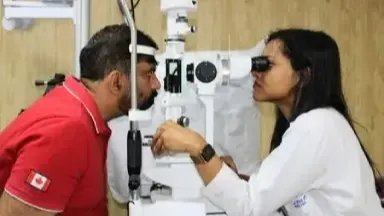
How does Oculoplastic Surgery work?
Oculoplastic surgery is a specialised branch of ophthalmology focused on the eyelids, tear ducts, eye sockets and nearby facial areas. It treats functional problems such as ptosis, blocked tear ducts and eyelid malposition as well as cosmetic concerns.
At Save Sight Centre, care is led by Dr. Rwituja Thomas Grover, fellowship-trained in Orbit, Oculoplastics and Ocular Oncology at Narayana Nethralaya Eye Institute.
Symptoms of Oculoplastic Surgery
Droopy eyelid
An upper eyelid that affects appearance or blocks part of the visual field.
What Vision Problems Can Oculoplastic Surgery Correct?
A drooping upper eyelid that may affect appearance or block the field of vision.
Tear duct surgery restores drainage when watering is caused by blockage.
Eyelid repositioning protects the ocular surface and relieves irritation.
Imaging-led assessment and treatment for conditions affecting the eye socket.
Removes excess skin and fat from upper or lower eyelids when appropriate.
Balanced procedures around the eyes designed around facial anatomy.
Risk Factors for Oculoplastic Surgery
Drooping or heavy eyelids
May affect appearance and, in severe cases, the visual field.
Treatment Options for Oculoplastic Surgery
Tightens or repositions the eyelid-lifting muscle to restore eyelid height and visual field.
Creates a new drainage pathway when the natural tear duct is blocked.
Repositions the eyelid margin to protect the ocular surface.
Removes excess skin and fat from upper and/or lower eyelids when indicated.
Refines the area around the eyes for a natural, balanced result.
Types of Oculoplastic Surgery
Restores eyelid height and can clear a blocked visual field.
Creates a new drainage pathway for persistent watering caused by blockage.
Repositions the eyelid margin and protects the eye surface.
Removes excess eyelid skin and fat for a refreshed, natural appearance.
Repositions a heavy or drooping brow contributing to eyelid crowding.
What Tests Are Done Before Oculoplastic Surgery?
Comprehensive Eye Examination
Assesses vision, ocular surface and the overall health of the eye.
Eyelid Function Testing
Measures eyelid height, muscle strength and movement.
Tear Duct Assessment
Checks drainage and identifies the site of any blockage.
Imaging for Orbital Conditions
CT or MRI may be used to assess the orbit and surrounding structures.
Photographic Documentation
Records eyelid position, asymmetry and progress for treatment planning.
Overall Health Review
Reviews medical history, medicines and anaesthesia suitability.
How Is Oculoplastic Surgery Performed Step by Step?
Functional Procedures — Functional procedures restore comfort, protect the ocular surface or improve the visual field.
Ptosis Repair
Tightens or repositions the eyelid-lifting muscle.
Tear Duct Surgery (DCR)
Creates a new drainage pathway for a blocked tear duct.
Entropion/Ectropion Correction
Repositions the eyelid margin to its normal position.
Cosmetic and Aesthetic Procedures — Aesthetic procedures are planned around facial anatomy to achieve natural, balanced results.
Blepharoplasty
Removes excess skin and fat from upper and/or lower eyelids.
Brow Lift
Repositions a heavy or drooping brow.
Oculofacial Aesthetic Procedures
Provides complementary refinements around the eyes.
Recovery Timeline After Oculoplastic Surgery
Pre & Post Procedure Care
🕐 Pre-Procedure
Before surgery
Share your medical history and medicines, complete requested tests and arrange transport home.
🌿 Post-Procedure
After surgery
Use cold compresses, avoid strenuous activity and sun exposure, do not rub the eyes and attend follow-ups.
Functional vs Cosmetic Oculoplastic Surgery
The same oculoplastic evaluation can identify whether your concern is functional, cosmetic or a combination of both.
| Feature | Oculoplastic Surgery | Functional | Cosmetic |
|---|---|---|---|
| Main goal | Restore comfort, protection or vision | Correct a functional problem | Refresh appearance naturally |
| Example conditions | Ptosis, watering, entropion | Blocked tear duct or eyelid malposition | Excess skin, bags or brow heaviness |
| Assessment | Eye health and eyelid function | Visual field and ocular surface | Facial balance and aesthetic goals |
| Recovery | Varies by procedure | Follow-up protects function | Swelling and bruising settle gradually |
Main goal
Example conditions
Assessment
Recovery
What Are the Risks and Side Effects of Oculoplastic Surgery?
Swelling and bruising
Usually temporary and improves during the first week.
Dry eye or watering
Temporary surface symptoms may occur during healing.
Asymmetry
Small differences may remain or require review as healing settles.
Visible scarring
Incisions are planned in natural creases or hidden locations where possible.
Infection or bleeding
Uncommon complications require prompt medical attention.
Doctors for Oculoplastic Surgery
Dr. Rwituja Thomas Grover
Fellowship-trained in Orbit, Oculoplastics and Ocular Oncology at Narayana Nethralaya Eye Institute, Bangalore. She treats functional and cosmetic eyelid, tear duct and orbital conditions.
Recognised for Quality Care
Frequently Asked Questions About Oculoplastic Surgery
It is a specialised branch of ophthalmology focused on the eyelids, tear ducts, eye sockets and nearby facial areas.
Cataract and LASIK surgery address the eye itself, while oculoplasty addresses eyelids, tear ducts and the orbit.
No. Ptosis repair and tear duct surgery are examples of primarily functional procedures.
Ptosis is a drooping upper eyelid treated by tightening or repositioning the eyelid-lifting muscle.
Visible swelling and bruising improve within the first week, while normal activities often resume within two to four weeks.
Functional blepharoplasty may be covered when medically necessary; purely cosmetic surgery is typically not covered.
Age-related narrowing, infection, inflammation, injury or previous sinus problems can contribute.
Yes. Congenital ptosis and tear duct blockage need age-appropriate care and vision monitoring.
Treatment depends on the type and location and may range from monitoring to surgical removal and reconstruction after imaging.
Anaesthesia prevents pain during surgery; mild discomfort, swelling and bruising afterward are managed with prescribed care.
Excess skin or muscle laxity generally needs surgery, while volume loss may sometimes be addressed with non-surgical options.
Entropion turns the eyelid inward and ectropion turns it outward; both can be corrected surgically.
Most patients can return to non-strenuous work within one to two weeks, depending on healing and the procedure.
Incisions are placed in natural creases or hidden locations where possible, and scars usually fade significantly.
Look for fellowship training, relevant qualifications, published work and experience with functional and cosmetic procedures.
Ready to Book Your Oculoplastic Surgery Consultation?
Book your consultation at Save Sight Centre, Delhi. Our expert team will help you understand your condition, recommend the right treatment and guide you through every step.