

 +91-7873-222-000
 WhatsApp

 Book Appointment

Performed at Save Sight Centre, opposite Adarsh Nagar Metro Station
From everyday soft lenses to specialty designs for keratoconus and overnight myopia control, our optometrists match the right lens to your exact eye shape, prescription and lifestyle.
🔎 Quick Answer: Contact Lens Clinic
Save Sight Centre fits soft, RGP, toric, multifocal, coloured, scleral, Rose-K and Ortho-K lenses with corneal mapping, tear-film assessment and personalised follow-up.
Soft, RGP, toric and multifocal lens fitting
Scleral and Rose-K lenses for irregular corneas
Ortho-K lenses for overnight myopia control
Corneal topography and tear-film assessment
Trial wear, insertion and removal training
Personalised follow-up and fit fine-tuning
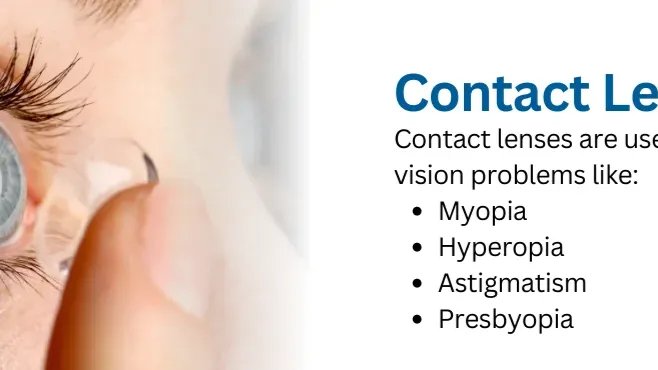
How does Contact Lens Clinic work?
Contact lenses are thin, curved discs placed directly on the eye to correct myopia, hyperopia, astigmatism and presbyopia. Our clinic provides professional fitting for everyday and specialty lenses, with measurements that go beyond a standard eye test.
Every fitting considers corneal shape, tear film, prescription, comfort, hygiene and lifestyle so that the lens is safe, well-centred and practical for daily use.
Symptoms of Contact Lens Clinic
Blurred vision
Vision remains unclear with spectacles or an existing lens.
What Vision Problems Can Contact Lens Clinic Correct?
Flexible, water-containing lenses for comfortable everyday wear.
Rigid gas-permeable lenses for astigmatism and higher prescriptions.
Designed to correct blurred vision caused by astigmatism.
Multiple focal zones for near and distance vision.
Cosmetic colour with prescription correction when clinically suitable.
Vaults the cornea and creates a moisture reservoir for difficult fits.
Specialised RGP design for keratoconus and irregular corneas.
Worn overnight to temporarily reshape the cornea for daytime vision.
Risk Factors for Contact Lens Clinic
Treatment Options for Contact Lens Clinic
Flexible options for convenience and easy adaptation.
Sharper, stable vision for astigmatism and higher refractive errors.
Custom lenses for irregular corneas and ocular-surface dryness.
Custom RGP design for keratoconus and pellucid marginal degeneration.
Overnight corneal reshaping for clear daytime vision and myopia control.
Types of Contact Lens Clinic
Eye-health check, measurements, lens selection, trial wear and handling training.
Detailed corneal mapping, trial assessment and follow-up fine-tuning.
What Tests Are Done Before Contact Lens Clinic?
Refraction Test
Measures your exact spectacle and contact-lens prescription.
Corneal Topography
Maps the corneal shape for accurate standard and specialty fitting.
Keratometry
Measures central corneal curvature and helps select the base curve.
Tear Film Assessment
Checks moisture and tear quality for comfort and safe wear.
Slit-Lamp Examination
Checks the eyelids, cornea and ocular surface before fitting.
Trial Lens Fitting
Assesses centration, movement, vision and comfort before ordering.
How Is Contact Lens Clinic Performed Step by Step?
Standard Soft/RGP Fitting — A routine fitting combines eye-health assessment, measurements, trial wear and handling training.
Eye Health Check
A comprehensive exam confirms that your eyes are healthy and suitable for lens wear.
Measurement and Lens Selection
Corneal curvature and refraction guide the brand, material and power.
Trial Wear and Training
You try the lenses in clinic and learn insertion, removal and care.
Specialty Scleral/Rose-K/Ortho-K — Specialty lenses are custom designed and may need more than one assessment visit.
Detailed Corneal Mapping
Topography creates a precise map of your unique corneal shape.
Trial Lens Assessment
Centration, movement, comfort and vision are evaluated before ordering.
Follow-Up Fine-Tuning
The fit is refined after the custom lens arrives for optimal comfort.
Recovery Timeline After Contact Lens Clinic
Pre & Post Procedure Care
🕐 Pre-Procedure
Before fitting
Bring your previous prescription and stop wearing lenses as advised before measurements.
🌿 Post-Procedure
After fitting
Wash hands, use approved solution, follow replacement schedules and never share lenses.
Which Contact Lens Is Right for Your Eye Condition?
The best lens depends on prescription, corneal shape, tear film, lifestyle and the result of your fitting assessment.
| Feature | Contact Lens Clinic | Recommended Lens Type |
|---|---|---|
| Everyday convenience | Soft or daily disposable | Soft lens |
| Astigmatism | Toric or RGP | Stable correction |
| Presbyopia | Multifocal | Near and distance zones |
| Keratoconus | Rose-K or scleral | Custom irregular-cornea fit |
| Dry eye | Scleral | Moisture reservoir |
| Myopia control | Ortho-K | Overnight wear |
Everyday convenience
Astigmatism
Presbyopia
Keratoconus
Dry eye
Myopia control
Doctors for Contact Lens Clinic
Specialist Optometrists
Our optometrists perform detailed fitting, trial assessment, handling training and follow-up fine-tuning for standard and specialty lenses.
Consulting Ophthalmologists
Consulting ophthalmologists assess ocular health and help manage complex corneal or ocular-surface requirements.
Recognised for Quality Care
Frequently Asked Questions About Contact Lens Clinic
The best lens depends on your prescription, corneal shape, tear film and lifestyle. A comprehensive fitting evaluation determines the right choice.
Most contact lenses should not be slept in unless specifically designed for overnight wear, like Ortho-K, or advised by your doctor.
Soft lenses are flexible and comfortable quickly, while RGP lenses offer sharper vision for astigmatism and higher prescriptions.
Rose-K lenses are specialised RGP lenses for keratoconus and irregular corneas where glasses or soft lenses no longer provide clear vision.
Ortho-K lenses are worn overnight for daytime vision and myopia control. Rose-K lenses are worn during the day for irregular corneas.
Yes, scleral and Rose-K lenses are designed to improve vision affected by keratoconus.
Follow the schedule for your lens type: daily, bi-weekly, monthly or as prescribed by your eye doctor.
Yes, prescription coloured lenses can correct refractive error when properly fitted and cared for.
Most patients find correctly fitted scleral lenses comfortable because they vault the cornea and hold a moisture reservoir.
Redness, pain, vision change, excessive tearing, light sensitivity or unusual discharge require prompt medical review.
Remove lenses before swimming because water can carry microorganisms and dislodge lenses.
Adaptation often takes several days to a couple of weeks as the eyes adjust to a rigid lens.
Yes, including Ortho-K for myopia control, when the child can manage hygiene responsibly.
Yes. Fitting includes corneal topography, keratometry, tear-film assessment and trial-lens evaluation.
Specialty lens pricing depends on corneal measurements and the custom fitting process; the exact cost is confirmed after evaluation.
Ready to Book Your Contact Lens Clinic Consultation?
Book your consultation at Save Sight Centre, Delhi. Our expert team will help you understand your condition, recommend the right treatment and guide you through every step.