
 +91-7873-222-000
 WhatsApp

 Book Appointment
Brown Spot on Eye: Causes, Symptoms, Treatment & When to Worry
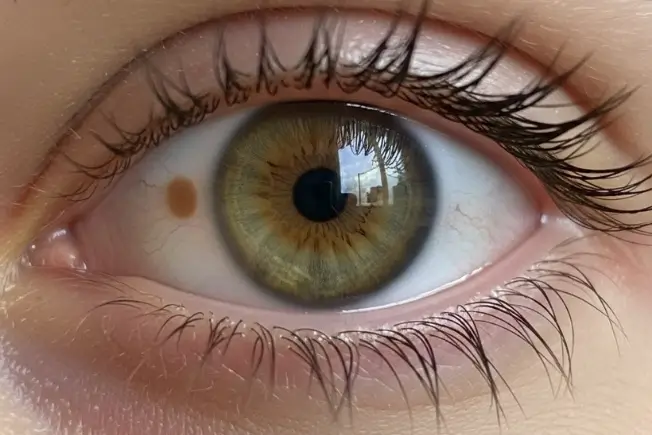
Noticing a brown patch on the white, coloured, or surface part of your eye can be alarming — but in the vast majority of cases, it's simply an eye freckle, harmless and stable for life. Here's what actually causes these spots, how to tell a normal one from a spot worth worrying about, and what an eye specialist will actually do about it.

Quick Answer
A brown spot on the eye is usually an eye freckle (also called a nevus) — a small, harmless patch of pigment on the sclera (white), iris (coloured part), or conjunctiva (clear surface layer), caused by melanin-producing cells clumping together. Most people are either born with one or develop it gradually from sun exposure or ageing, and it never affects vision. In rare cases — roughly 5 in a million adults — a pigmented spot can be an early sign of ocular melanoma, which is why any spot that grows, changes colour or shape, or comes with vision changes needs a prompt eye exam.
Key Takeaways
- Brown spots on the eye are almost always harmless eye freckles (nevi), caused by ordinary melanin clumping.
- They can appear on the sclera (conjunctival nevus), the iris (iris nevus), or as flat pigmentation in adults (primary acquired melanosis).
- Genetics, sun exposure, ageing, and inflammation are the most common causes.
- Ocular melanoma is a genuine but rare possibility — about 5 cases per million adults each year.
- Warning signs include rapid growth, colour or shape change, raised texture, bleeding, or vision changes.
- Most spots simply need yearly monitoring with photographs; treatment is only needed for cosmetic concerns or confirmed cancer.
Figures are general clinical estimates and can vary; your eye specialist can give you numbers specific to your case.
What Is a Brown Spot on the Eye?
A brown spot on the eye is a small, pigmented area that can appear on the white part (sclera), the coloured part (iris), or the clear surface layer (conjunctiva) of the eye. These spots form because of melanin — the same natural pigment that gives colour to your skin, hair, and eyes — clumping together in one spot instead of spreading evenly. You may also hear them called an eye freckle, ocular nevus, or pigmented eye lesion. Most people are either born with one or notice it developing gradually, and in the overwhelming majority of cases, it stays completely harmless and doesn't affect vision.
What Are the Types of Brown Spots on the Eye?
Conjunctival Nevus
Common, Usually HarmlessAppears on the white part of the eye. Common in children and young adults, and typically stays stable for life without causing any problems.
Iris Nevus
Usually StableA brown freckle within the coloured part of the eye, often discovered during a routine eye exam. Generally stable, but still worth periodic monitoring for size changes.
Primary Acquired Melanosis (PAM)
Needs MonitoringMostly seen in middle-aged or older adults, appearing as flat brown pigmentation on the conjunctiva. A small number of cases can progress toward cancer, so this type needs closer, more regular follow-up than a simple nevus.
Is a Brown Spot on the Eye the Same as a Pinguecula?
Not usually. An eye freckle (nevus) is a genuine patch of pigmented cells and typically looks brown, grey, or tan. A pinguecula is a different, very common growth caused by long-term sun and wind exposure — it's usually a yellowish bump rather than a true pigmented spot, though it can occasionally look darker depending on the lighting, which is where the confusion comes from. Both are generally harmless, but an eye exam is the simplest way to tell them apart with certainty.
What Causes a Brown Spot to Appear on the Eye?
Natural Melanin and Genetics
Some people naturally produce more melanin, and eye freckles can run in families — if a parent has one, you may be more likely to develop one too.
Sun Exposure
Long-term exposure to ultraviolet rays increases melanin production in eye tissue and is a recognised contributor to new or darkening spots.
Ageing
As we grow older, gradual changes in pigmentation can appear in the eye, which is part of why primary acquired melanosis is more common in older adults.
Inflammation or Medications
Eye infections, chronic irritation, or certain medications can occasionally trigger pigmentation changes in the tissue of the eye.
Rare Abnormal Cell Growth
In rare cases, a brown spot can be an early sign of ocular melanoma, a type of eye cancer. This is uncommon, but it's exactly why any changing spot deserves early diagnosis.
How Common Is a Brown Spot on the Eye?
Roughly 5-10% of people may develop iris freckles at some point, and conjunctival nevus is a common, unremarkable finding in children and young adults. Primary acquired melanosis usually shows up later in life, in middle-aged or older adults. Ocular melanoma, by contrast, is genuinely rare — affecting around 5 people per million adults each year. The reassuring takeaway: the overwhelming majority of brown eye spots are completely non-cancerous.
What Increases Your Risk of a Brown Spot — or Ocular Melanoma?
| Risk Factor | Relevant To |
|---|---|
| Family history of eye freckles | General nevus development |
| Excess UV / sun exposure | General nevus & pigmentation change |
| Increasing age | PAM and general pigmentation changes |
| Chronic eye injury or inflammation | Pigmentation changes |
| Light-coloured eyes, fair skin | Ocular melanoma specifically |
| Dysplastic nevus syndrome (atypical mole syndrome) | Ocular melanoma specifically |
Having a risk factor doesn't mean you'll develop a problem — it simply means routine monitoring is a good idea.
Normal Signs vs Warning Symptoms — How Do You Tell Them Apart?
Normal, usually harmless signs:
What Warning Symptoms Mean You Should See a Doctor?
- Rapid increase in size
- Change in colour or an irregular, blurred border
- A raised or noticeably thick spot
- Redness, irritation, or blurred vision
- Bleeding from the spot
If you notice any of these, consult an eye specialist promptly rather than waiting for your next routine visit.
What Symptoms Could Point Specifically to Ocular Melanoma?
Ocular melanoma is rare, but it's worth knowing its specific warning signs, since they go beyond just the appearance of the spot itself:
- A dark spot on the iris that keeps getting bigger
- Any change in the shape or size of your pupil
- Bulging of the eye
- A change in your eyeball's position within the socket
- New flashes of light or floaters
- Blurred vision or loss of part of your visual field
These symptoms can also come from other, unrelated eye conditions — but combined with a pigmented spot, they're worth an urgent professional opinion rather than a wait-and-see approach at home.
What's the Difference Between a Brown Spot on the Eye and a Skin Mole?
| Feature | Brown Spot on Eye | Skin Mole |
|---|---|---|
| Location | Inside or on the surface of the eye | Skin surface |
| Who monitors it | Ophthalmologist | Dermatologist |
| Potential impact | May affect vision if it changes | Usually cosmetic only |
| Treatment approach | Eye-specific laser or surgery | Skin procedures |
How Is a Brown Spot on the Eye Diagnosed?
Slit-Lamp Examination
Gives your doctor a detailed, magnified view of the spot and surrounding eye tissue.
Fundus Photography
Documents the spot with a clear photo so future visits can accurately track any change over time.
OCT and Ultrasound
Checks the thickness and depth of the pigmented area, especially useful for spots inside the eye.
Biopsy
Performed only when there's a genuine suspicion of cancer, to confirm a diagnosis before deciding on treatment.
What Are the Treatment Options for a Brown Spot on the Eye?
Treatment depends entirely on the type and risk level of the pigmentation:
Regular monitoring
Most harmless spots need nothing more than yearly photographs and observation — no active treatment required.
Laser treatment
Used for cosmetic removal of confirmed non-dangerous pigmentation that bothers the patient's appearance.
Surgical removal
Recommended when malignancy is suspected, or when a spot on the outer eye causes ongoing discomfort.
Oncology-based treatment
For confirmed ocular melanoma, options include radiation therapy (often brachytherapy, where a radioactive disk is placed near the tumour for a few days), external beam radiation, surgery, or in select advanced cases, immunotherapy.
Good to know: Doctors generally won't remove a harmless brown spot just because it's there — any procedure on the eye carries some risk, and removal isn't medically necessary for a stable nevus. It's usually only removed if it affects your eye's appearance and you request it, or if cancer is suspected.
What Are Simple Self-Monitoring and Prevention Tips?
- Take clear photos of the spot every few months to track any changes yourself
- Check specifically for changes in size, shape, or colour
- Avoid rubbing your eyes
- Wear UV-protective sunglasses outdoors
- Get a yearly eye check-up, even if the spot seems stable
- Treat any eye infections or irritation promptly rather than letting them linger
When Should You Visit an Eye Specialist?
Book an appointment if you notice:
- A new brown spot that appeared suddenly
- Growth or colour change in an existing spot
- Eye pain or irritation around the area
- Blurred vision or new floaters
- A raised or bleeding pigmented spot
Early consultation helps prevent complications and ensures the right treatment path, whatever the cause turns out to be.
Dr. Rajeev JainDirector · Retina, Cataract, LASIK & Uvea Specialist
"Nine times out of ten, when a patient comes in worried about a brown spot, we're able to reassure them the same day that it's a completely ordinary eye freckle. What I always tell people is this: don't diagnose it yourself from a mirror or a photo — let us document it properly at your first visit, so any future change, however small, is easy to spot and act on quickly."
Frequently Asked Questions About Brown Spots on the Eye
Most cases are harmless eye freckles (nevi) caused by ordinary melanin clumping, similar to a skin freckle. Sudden changes in size, shape, colour, or a spot that becomes raised, painful, or affects vision need medical evaluation, since these can rarely signal ocular melanoma.
Usually not — most eye freckles remain stable for life once they appear. They don't fade or disappear on their own. Cosmetic removal is possible with laser or surgery if a spot bothers you or affects the eye's appearance, but doctors generally avoid removing a harmless spot to prevent unnecessary risk to the eye.
A spot that seems to appear suddenly is often one that was always present but only recently noticed, or one that has genuinely grown due to UV exposure, ageing, or inflammation. Rarely, a truly new and growing pigmented spot can indicate abnormal cell growth, which is why sudden appearance is always worth having examined.
Most harmless spots simply need regular monitoring with photographs to track any change over time. Cosmetic laser or surgical removal is an option for spots affecting appearance. If melanoma is confirmed, treatment may include radiation therapy (often brachytherapy), surgery, or in select cases, immunotherapy.
Yes. Conjunctival nevus, a freckle on the white surface of the eye, commonly appears in children and young adults and is typically harmless. It's still worth pointing out to your child's eye doctor at a routine check-up so it can be documented and monitored over time.
Rarely. The vast majority of brown spots are simple eye freckles, not cancer. Ocular melanoma is genuinely uncommon, affecting roughly 5 people per million adults, but regular eye check-ups help catch the rare case early, when treatment is most effective.
An eye freckle (nevus) is a true patch of pigmented cells and can appear brown, grey, or tan. A pinguecula is a different, very common growth caused by sun and wind exposure — usually yellowish, but it can look darker in some lighting, which is why the two are sometimes confused. An eye exam easily tells them apart.
Watch for a dark spot on the iris that keeps getting bigger, a change in pupil shape or size, bulging of the eye, a shift in the eyeball's position in the socket, flashes of light or new floaters, or blurred vision or loss of part of your visual field. Any of these combined with a pigmented spot should prompt a same-week eye exam.
Most eye specialists recommend photographing and reviewing a stable nevus about once a year as part of a routine eye exam. If a spot has features that need closer watching, or if you notice any change yourself, your doctor may recommend more frequent follow-up.
For ocular melanoma specifically, yes — light-coloured eyes, fair skin, and a condition called dysplastic nevus syndrome (atypical mole syndrome) are recognised risk factors. This doesn't mean a brown spot in someone with light eyes is dangerous, just that it's worth having it checked and monitored as a routine precaution.
Doctors generally avoid removing a brown spot that shows no worrying features, because any procedure on the eye carries some risk, and removal isn't medically necessary for a stable, harmless nevus. Removal is usually only considered if the spot is affecting your eye's appearance and you request it, or if there's a suspicion of cancer.
Noticed a Brown Spot on Your Eye?
Get it properly examined and documented at Save Sight Centre, Adarsh Nagar, North Delhi. NABH & ISO accredited · 15+ years · 1,70,000+ patients treated.
Disclaimer: For general awareness only, not medical advice. Please consult an eye specialist at Save Sight Centre to determine the best procedure for your eyes. Results may vary from person to person. Figures cited are approximate and based on general clinical patterns.