
 +91-7873-222-000
 WhatsApp

 Book Appointment

Barrage Laser Treatment: A Quick, Painless Way to Protect Your Retina
Barrage laser is a short, in-clinic laser procedure that seals weak or torn parts of the retina before they can lead to retinal detachment. No cuts, no stitches — just a targeted laser and a few minutes in the chair.
Quick Answer
Barrage laser (also called barrage laser photocoagulation) is a preventive retinal procedure that uses controlled laser burns to create a protective barrier around a retinal tear, hole or weak area. As these burns heal into scars over a few days, they "seal" the retina in place, stopping fluid from seeping underneath and causing a retinal detachment. It's done under local anaesthetic drops, takes about 10-30 minutes, and most patients resume normal activities the next day.
Key Takeaways
- Barrage laser is preventive — it seals weak or torn retina before it detaches, but it doesn't repair an existing detachment.
- It's non-invasive, done with numbing drops, and typically takes 10-30 minutes per session.
- Commonly used for retinal tears, holes, lattice degeneration, and before high-risk surgeries like LASIK or cataract removal.
- Mild discomfort, temporary blurred vision and small permanent blind spots at the laser sites are normal and usually unnoticed in daily life.
- Costs ₹6,000-₹8,000 per eye at Save Sight Centre, depending on the number of quadrants treated.
- Structured follow-up — at 1-2 days, 1-2 weeks, 4-6 weeks, then every 6-12 months — is essential to confirm the seal holds.
What Is Barrage Laser Treatment?
Barrage laser — also called barrage laser photocoagulation or prophylactic retinal laser — is a targeted use of laser light to build a protective barrier around a weak or damaged part of the retina, the light-sensitive layer at the back of your eye. It's a preventive procedure: it doesn't heal the tear or hole itself, but it stops that weak spot from progressing into a full retinal detachment, which can cause serious, sometimes irreversible vision loss if left untreated.
A few surgeries — including LASIK and cataract surgery — actually require the retina to be checked and, if needed, treated with barrage laser first, since pressure changes during those procedures can worsen an existing retinal weakness.
How Does Barrage Laser Protect the Retina?
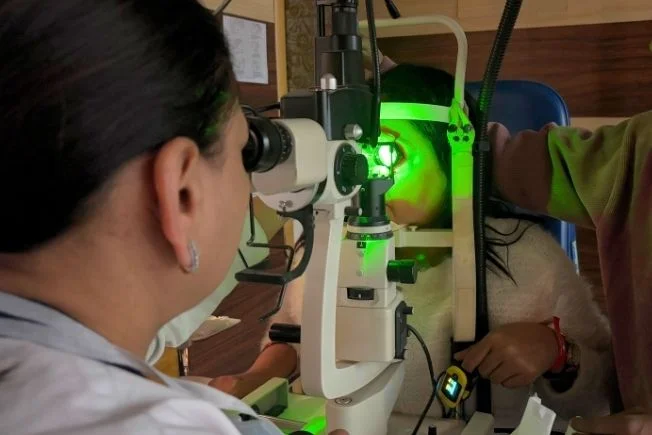
Think of it as "welding" the retina back down to the tissue behind it. Using a slit-lamp-mounted laser and a special contact lens to focus the beam precisely, your doctor places a series of small, controlled burns in two or three rings around the tear or weak area.
Controlled Burns
Tiny laser spots are placed in rings around the weak or torn retinal area — each shot lasts a fraction of a second.
Healing Into Scars
Over the following days, these burns heal into small, firm scars that bond the retina to the layer beneath it.
A Sealed Barrier
The scar ring acts like a fence — stopping fluid from seeping under the retina and lifting it further.
Detachment Risk Reduced
With the weak area sealed, the risk of it progressing into a full retinal detachment drops significantly.
What Conditions Does Barrage Laser Treat?
Retinal tear or hole — a break or opening in the retina that can let fluid seep underneath and cause detachment if left unsealed.
Lattice degeneration — patches of thin, weak retina, especially common in high myopia, that are more prone to tearing.
Risk of retinal detachment — early warning signs are sealed off before they progress into a full detachment.
New floaters and flashes — when caused by retinal thinning or a minor tear, laser can stop the condition from worsening.
Fellow eye after a detachment — if one eye has had a retinal detachment, weak areas in the other eye are often treated preventively.
Before LASIK or cataract surgery — required in patients with retinal weak spots so surgery doesn't put extra strain on the eye.
Who Is a Good Candidate for Barrage Laser?
Your doctor decides case by case, after a dilated fundus examination and a careful check of the peripheral retina. Barrage laser is typically considered for people who:
Have a clear retinal tear, hole, or lattice degeneration confirmed on examination.
Have already had a retinal detachment in the other eye.
Have high myopia with documented weak retinal areas.
Have experienced a significant eye injury affecting the retina.
Patients who already have a full retinal detachment need surgery rather than laser, and those with a very limited retinal view — from a dense cataract or vitreous haemorrhage — may need another procedure first before barrage laser becomes possible.
How Is Barrage Laser Different From Other Retinal Lasers?
"Laser treatment" covers several very different procedures in ophthalmology. Here's how barrage laser compares:
| Laser Type | Purpose |
|---|---|
| Barrage Laser | Preventive — seals retinal tears, holes and weak spots |
| Focal Laser | Seals a leaking blood vessel, often in diabetic macular oedema |
| Panretinal Photocoagulation (PRP) | Treats wide areas of oxygen-starved retina in advanced diabetic retinopathy |
| YAG Laser Capsulotomy | Clears a cloudy membrane that can form after cataract surgery |
| Iridotomy Laser | Creates a small opening in the iris to treat narrow-angle glaucoma |
What Happens During Barrage Laser Treatment?
Dilated Examination
A detailed retinal exam confirms the tear, hole or weak area and explains why laser is recommended.
Dilating Drops
Drops widen the pupil for a clear view of the retina — this takes about 20-30 minutes to take effect.
Numbing Drops
Local anaesthetic drops numb the eye surface so the contact lens and laser aren't felt as pain.
Laser Application
A special contact lens focuses the laser as small, controlled spots are placed around the weak area — 10-30 minutes in most cases.
Recovery & Instructions
The lens is removed, the eye rinsed, and you're given simple aftercare instructions before heading home the same day.
Does Barrage Laser Hurt?
Most patients feel discomfort rather than genuine pain — a mild tingling, warmth, or brief pricking sensation at each laser spot, and some find the bright flashes of light momentarily dazzling. A short-lived dull ache or grittiness from the contact lens can follow, usually settling within a few hours. If discomfort feels significant during the procedure, your doctor can pause, adjust the laser settings, or add extra numbing.
What Are the Benefits of Barrage Laser?
No Cuts or Stitches
A non-invasive laser procedure that significantly lowers the risk of infection compared to surgical alternatives.
Quick, In-Clinic Procedure
Most sessions take 10-30 minutes and are completed the same day, with no hospital stay required.
Enables Safer LASIK & Cataract Surgery
Clearing retinal weak spots first protects the eye from complications during other planned procedures.
High Success Rate
Most patients return to normal daily activities the very next day, with a strong track record of preventing detachment.
What Are the Risks and Side Effects of Barrage Laser?
Temporary Blurred Vision
CommonMild light sensitivity, floaters or blurred vision for a few hours to a day after the procedure.
Mild Ache or Headache
CommonA short-lived dull ache around the eye, usually settling on its own within a day.
Small Permanent Blind Spots
MildTiny scars form at each laser site in the outer retina — almost always unnoticed in everyday vision.
Brief Dip in Night Vision
MildSome patients notice slightly reduced night vision for a short period as the laser sites settle.
Infection or Inflammation
RareUncommon, but prompt medical care ensures it's managed effectively if it occurs.
Tear Progression Despite Treatment
RareVery rarely, a tear can still progress toward detachment even after treatment — any new flashes, floaters or vision drop need same-day review.
What Should You Do — and Avoid — After Barrage Laser?
Use prescribed eye drops
Anti-inflammatory or lubricating drops on schedule help reduce inflammation and support healing.
Wear sunglasses for 24-48 hours
Glare and light sensitivity are higher than usual right after the procedure.
Rest your eyes on day one
Avoid heavy reading or screen use for the first day to let your eyes settle.
Attend every follow-up visit
Reviews confirm the laser scar is sealing correctly and catch any new weak spots early.
No Eye Rubbing or Pressure
Avoid rubbing or pressing on the treated eye while it heals.
Avoid Strenuous Activity
Skip heavy exercise, bending, lifting, swimming or contact sports for one to two weeks.
Don't Drive the Same Day
Dilation and glare make same-day driving unsafe — wait until the next morning.
Don't Ignore New Symptoms
New flashes, floaters or a shadow in your vision need same-day medical attention.
What Is the Follow-Up Schedule After Barrage Laser?
Structured follow-up is just as important as the procedure itself:
Day 1-2: Confirms the treated area is settling correctly and manages any residual discomfort.
Week 1-2: The laser scar starts to form; your doctor confirms the barrier is sealing the retina down.
Week 4-6: A full dilated exam checks the sealed area and looks for any new weak spots.
Every 6-12 months: Ongoing review, especially important for high myopia or a history of detachment in the other eye.
Why Is Barrage Laser Required Before LASIK or Cataract Surgery?
Before LASIK or cataract surgery, your retina needs to be checked and, if necessary, protected — because pressure changes and stress on the eye during these procedures can worsen an existing tear, hole or weak area. Barrage laser seals these vulnerable spots beforehand, protecting your eyesight and helping ensure the LASIK or cataract procedure itself goes smoothly. This is especially important for patients with high myopia or any existing retinal disease.
When Should You See a Doctor After Barrage Laser?
Seek same-day medical attention if you notice:
- A sudden shower of new floaters
- New flashes of light that weren't there before
- A dark curtain or shadow spreading across your vision
- Significant pain, redness, or discharge
- A sharp, sudden drop in vision
How Much Does Barrage Laser Cost in Delhi?
At Save Sight Centre, barrage laser treatment costs ₹6,000 to ₹8,000 per eye, depending on the number of retinal quadrants that need treatment. The exact cost can vary based on the complexity of your condition and the extent of the area being treated — your doctor will confirm the precise cost after your dilated examination.

Dr. Rajeev JainDirector · Retina, Cataract, LASIK & Uvea Specialist
"Barrage laser is one of the most valuable preventive tools we have in retina care — it's quick, it's safe, and when done early it stops a small weak spot from ever becoming a retinal detachment. We also screen for retinal tears and lattice degeneration routinely before LASIK and cataract surgery, since protecting the retina first is what makes those procedures safe. Patients with high myopia especially should have their peripheral retina checked regularly, even without symptoms."
Frequently Asked Questions About Barrage Laser Treatment
No, numbing drops are used before the procedure so most patients feel only mild tingling, warmth or a brief pricking sensation rather than pain. A few notice the bright flashes of light are momentarily dazzling.
Most people recover within a few days. Mild grittiness, light sensitivity or a dull ache may last a few hours to a day, and normal activities can usually resume the next day with some precautions.
Not on the same day. Dilating drops blur your vision and increase glare for several hours. Most patients are comfortable driving again the next morning once the dilation has fully worn off.
Many health insurance plans in India do cover barrage laser treatment, but coverage varies by policy and insurer. It's best to confirm directly with your provider or ask our team to help verify your coverage.
Barrage laser treats retinal tears, retinal holes, lattice degeneration, weak spots after eye trauma, and areas at risk of retinal detachment — including in the fellow eye of someone who already had a detachment in the other eye.
Yes, when performed by an experienced ophthalmologist, barrage laser is considered a safe, minimally invasive procedure with a short recovery time and a strong track record of preventing retinal detachment.
Barrage laser has a high success rate at sealing retinal tears and weak areas, especially when performed before significant detachment occurs. Early diagnosis and precise laser application are the biggest factors in a good outcome.
Most patients notice their vision stabilise within a few hours of the procedure, though this depends on the severity of the condition treated. Follow-up visits confirm the laser scar has sealed properly.
Barrage laser is preventive, not curative — it cannot repair a retina that has already detached, and it doesn't guarantee detachment will never happen later. It also leaves small permanent blind spots at the laser sites, though these are in the outer retina and rarely noticed in daily life.
It significantly reduces the risk by sealing the weak or torn area, but it cannot guarantee detachment will never occur, especially if new weak spots develop elsewhere in the retina over time.
Possibly. If new areas of thinning, tears or lattice degeneration develop later — more common in high myopia — a further sitting of barrage laser may be recommended, which is why regular retinal reviews matter.
No. Barrage laser is a quick, in-clinic, non-surgical procedure using laser light, with no cuts or stitches. Retinal surgery, such as vitrectomy or scleral buckle, is a more involved operation used once a detachment has already occurred.
Most patients need just one sitting to seal the affected area, and it usually covers both eyes in the same visit if needed. Additional sittings are only required if new weak areas are found on a later review.
Protect Your Retina Before It Becomes an Emergency
Get a dilated retinal exam at Save Sight Centre, Adarsh Nagar, North Delhi. NABH & ISO accredited · 25+ years · 1,70,000+ patients treated.
Disclaimer: For general awareness only, not medical advice. Please consult an eye specialist at Save Sight Centre to determine the best procedure for your eyes. Results vary by person. Figures cited are approximate and based on general clinical patterns and published research.