
 +91-7873-222-000
 WhatsApp

 Book Appointment
Artificial Tears: Benefits, Uses & Best Drops for Dry Eyes
Screens, pollution, AC, aging — dry eyes have become one of the most common eye complaints around. Artificial tears are the simplest, most effective first step for relief. Here's everything you need to know to use them the right way.
Quick Answer
Artificial tears are lubricating eye drops that mimic your natural tear film to relieve dryness, irritation and discomfort. They're the standard first-line treatment for dry eyes — safe, effective, and available without a prescription. Research shows regular use meaningfully improves symptoms within about a month, though the type that works best for you (preservative-free vs. preserved, watery vs. gel) depends on how severe your dryness is and how often you need relief. If drops alone aren't helping after a month of consistent use, it's time to see an eye specialist.
Key Takeaways
- Artificial tears are the first-line treatment for dry eyes — easy to use, widely available, and low-risk.
- Dry eyes happen either from too little tear production (aqueous deficiency) or tears evaporating too fast (evaporative dry eye).
- Preservative-free drops are gentler and better for frequent use, sensitive eyes, contact lens wearers, and post-surgery care.
- Symptoms typically improve within about a month of consistent use (roughly 4 times a day); if there's no improvement, see a specialist.
- Once opened, multi-dose bottles should be discarded after 3-4 months; preservative-free vials within 24 hours.
- Artificial tears manage dry eye symptoms — they don't permanently cure the underlying condition.
What Are Artificial Tears?
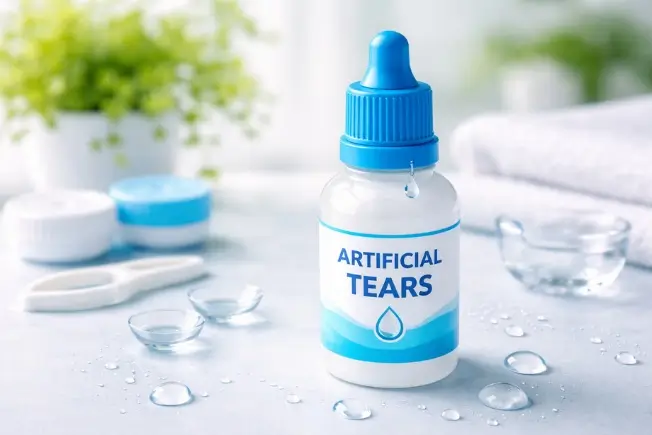
Artificial tears are specially formulated eye drops designed to mimic your natural tears. Your real tears are made of three layers — an oil layer that prevents evaporation, a water layer that hydrates, and a mucus layer that helps everything spread evenly across your eye. Artificial tears aim to replicate these layers, lubricating the eye's surface and restoring a healthy, stable tear film to relieve dryness, irritation and discomfort.
How common is dry eye? Extremely. Millions of people worldwide deal with some degree of dry eye, and it happens roughly twice as often in women as in men. Digital screens, air conditioning, pollution and aging are all major contributors — which is exactly why artificial tears have become such a routine part of daily eye care for so many people.
Why Do You Need Artificial Tears?
Dry eyes happen for one of two core reasons — and knowing which one applies to you helps explain why your eyes feel the way they do.
Aqueous Deficiency — Not Enough Tears
Your eyes don't produce enough of the watery part of tears. Common causes include aging, hormonal changes (especially in women), medications like antihistamines, diuretics, beta blockers and sleeping pills, autoimmune conditions, and post-surgical dryness after procedures like LASIK. It typically feels like dryness or tightness, burning, redness, or a foreign-body sensation.
Evaporative Dry Eye — Tears Disappear Too Fast
Usually caused by problems in the oil layer of the tear film. Common triggers include excessive screen time (which reduces blinking), meibomian gland dysfunction (blocked oil glands in the eyelids), environmental factors like AC, pollution and wind, and long-term contact lens use. Ironically, this can cause watery eyes, along with blurred or fluctuating vision, fatigue, and light sensitivity.
How Do Artificial Tears Work?
When your eyes lack moisture, the surface becomes rough, leading to discomfort and irritation. Artificial tears form a smooth, hydrating layer over the cornea, giving instant relief. They also reduce the friction your eyelids create with every blink, which is what causes that gritty, sandpaper-like feeling in dry eyes. Essentially, they act as a protective shield — keeping your eyes moist and comfortable throughout the day.
What Types of Artificial Tears Are Available?
Not all artificial tears are the same. The right one for you depends on how severe your symptoms are and your lifestyle.
Preservative-Free Drops
Ideal for frequent use, sensitive eyes and post-surgery care. Come in single-use vials and are the safer choice for long-term, daily use.
Drops With Preservatives
Suitable for occasional use, available in cost-effective multi-use bottles. Overuse may cause irritation for some people, especially with frequent daily use.
Gel-Based Drops
Thicker consistency for longer-lasting relief — good for moderate dry eye. Best used before bedtime, since they can cause temporary blurred vision.
Eye Ointments
Very thick and long-lasting, used for severe dry eye. Best for nighttime use only, as they cause noticeable blurring.
Lipid-Based Tears
Specially designed for evaporative dry eye and meibomian gland dysfunction — they help restore the oil layer that prevents tear evaporation.
What Are the Benefits of Using Artificial Tears?
Instant Relief From Dryness
Quickly soothes irritation and discomfort, often within minutes of use.
Improved Vision Clarity
Dry eyes can cause blurry vision — lubrication stabilises the tear film and improves focus.
Reduced Eye Strain
Especially helpful for people who spend long hours on digital screens throughout the day.
Post-Surgery Support
Commonly recommended after LASIK, cataract surgery, or other eye procedures to aid healing and comfort.
How Do You Use Artificial Tears Correctly?
Wash Your Hands
Thoroughly clean your hands before touching your eyes or the dropper.
Tilt Your Head Back
Look up and gently pull down your lower eyelid to create a small pocket.
Instill 1-2 Drops
Squeeze the correct number of drops into the pocket, following the package instructions.
Close Your Eyes Gently
Keep your eyes closed for a few seconds to let the drop spread evenly across the surface.
Avoid Touching the Dropper Tip
Never let the tip touch your eye or eyelashes, to avoid contaminating the bottle.
How Often Should You Use Artificial Tears?
Mild dryness: 2-3 times a day is usually enough.
Moderate dryness: 4-6 times a day, ideally with preservative-free drops.
Severe dryness: As prescribed by your eye specialist — this level of frequency needs professional guidance.
Preservative-free drops can generally be used more frequently without irritation. If you find yourself reaching for drops constantly just to get through the day, that's a sign to get the underlying cause checked rather than just increasing how often you use them.
How Long Does It Take for Artificial Tears to Work?
Most people feel some relief within minutes — that's the immediate lubricating effect. But for meaningful, lasting improvement, research on artificial tears shows that regular use, roughly four times a day, typically takes about a month to noticeably improve symptoms. The underlying clinical signs of dry eye (like tear film stability) can take even longer, sometimes several months, to improve.
Not everyone responds the same way to every drop, and not all patients get full relief from artificial tears alone. If you've used a consistent product regularly for a month with no real improvement, that's the right time to see a specialist rather than continuing to try different bottles on your own.
How Do You Choose the Right Artificial Tears?
With so many options on the shelf, choosing the right one comes down to two main factors: how severe your dryness is, and how often you need to use drops.
| Severity / Frequency | Recommended Type |
|---|---|
| Mild — occasional dryness, screen fatigue | Light, watery artificial tears, used 2-3x/day |
| Moderate — frequent discomfort, burning, redness | Gel-based or thicker drops for longer relief |
| Severe — persistent dryness, pain, blurred vision | Preservative-free, high-viscosity drops or ointments |
| Occasional use (2-3x/day) | Drops with mild preservatives are safe |
| Frequent use (4+ times/day) | Go for preservative-free artificial tears |
If you have chronic dry eye, preservative-free drops are almost always the better long-term choice — they're gentler and carry less risk of irritation with repeated use.
Are Artificial Tears Safe? What Are the Side Effects?
Yes, artificial tears are generally safe and well-tolerated. Side effects are uncommon, but worth knowing:
Temporary Blurred Vision
CommonMore likely with gel-based drops or ointments — usually clears within a few minutes.
Mild Irritation
MildA brief stinging or burning sensation right after application, especially with preserved formulas.
Sensitivity to Preservatives
MildRedness or discomfort with frequent use of preserved drops — usually resolves by switching to preservative-free.
Allergic Reaction
RareRarely, symptoms like swelling or breathing difficulty can occur — this needs immediate medical attention.
If symptoms persist or worsen despite regular use, visit an eye specialist rather than continuing to self-treat.
How long can you keep an opened bottle? Once opened, multi-dose bottles with preservatives should generally be discarded after 3-4 months, even if drops remain. Preservative-free single-use vials have no preservative to stop bacterial growth, so they should be discarded within 24 hours of opening — never saved for the next day.
Artificial Tears vs. Other Eye Drops: What's the Difference?
Artificial tears are designed specifically to lubricate and relieve dryness. Other eye drops may contain actual medication for a specific condition — decongestants for red eyes (which can cause rebound redness with overuse), antihistamines or NSAIDs for allergies, steroids after surgery, antibiotics for infections, or drugs to manage glaucoma. So not every eye drop is an artificial tear, and reaching for a medicated drop when you actually have simple dryness won't solve the problem — and could cause side effects of its own.
Can You Use Artificial Tears With Contact Lenses?
Yes, but choose a contact lens-compatible formula — these are specially made to keep lenses moist without causing damage or blurring. As a general rule, avoid artificial tears with preservatives while your lenses are in, unless your doctor has specifically approved that product for lens wear, and skip gels and ointments entirely with contacts in, since they're thick enough to stick to the lens surface.
Can Artificial Tears Cure Dry Eyes Permanently?
No — artificial tears manage the symptoms of dry eye, but they don't permanently cure the underlying condition. For longer-term relief, especially with moderate-to-severe dry eye, treatment may need to include lifestyle changes, prescription medications, or advanced in-clinic therapies alongside your regular drops.
Tips to Prevent Dry Eyes
Artificial tears work best when paired with a few simple daily habits:
Follow the 20-20-20 rule
Every 20 minutes, look at something 20 feet away for 20 seconds.
Blink frequently on screens
We blink far less while focused on a screen — make a conscious effort to blink fully.
Stay hydrated
Adequate water intake supports healthy tear production throughout the day.
Use a humidifier
Especially helpful in AC-heavy environments or dry winter months.
Wear sunglasses outdoors
Protects your eyes from wind, dust and UV that can worsen evaporative dryness.
Eat Omega-3-rich foods
A balanced diet supports the oil layer of your tear film.
When Should You See an Eye Specialist?
Artificial tears can manage mild to moderate dry eyes on their own, but see a doctor if you notice:
- Persistent dryness despite regular use for a month
- Needing drops far more often than your provider recommended
- Redness, pain, or sensitivity to light
- Blurred vision that doesn't clear, or eye discharge
- Any severe allergic reaction — swelling, breathing difficulty or dizziness needs immediate medical attention

Dr. Rajeev JainDirector · Retina, Cataract, LASIK & Uvea Specialist
"Artificial tears are genuinely the right first step for almost everyone with dry eyes — they're safe, effective, and there's no reason to wait to try them. But I always tell patients: give a product a fair month of consistent use before deciding it isn't working. If it still isn't helping by then, don't just keep switching bottles — come in so we can find out what's actually driving the dryness, because sometimes drops alone aren't enough."
Frequently Asked Questions About Artificial Tears
Yes, artificial tears are safe for daily use. Preservative-free artificial tears are recommended for frequent or long-term use, as they reduce the risk of irritation and are gentler on the eyes.
Yes, especially preservative-free formulations, which are designed for long-term use. However, if you need them very frequently (more than 4-6 times daily), it's best to consult an eye specialist to identify the underlying cause of dryness.
Yes, but you should use contact lens-compatible artificial tears. These drops are specially formulated to keep lenses moist and comfortable without causing damage or blurred vision. Avoid gels and ointments while your contacts are in, and check whether a preserved formula is safe for your lenses.
Most artificial tears with preservatives should be limited to 4-6 times a day. Preservative-free drops can be used more frequently, depending on the severity of dryness — but if you're reaching for drops constantly, get the underlying cause checked.
The relief from artificial tears typically lasts from a few minutes to a few hours, depending on the type. Standard drops give short-term relief, gel-based drops last longer, and ointments give the longest relief but are usually used at night.
Artificial tears can temporarily improve vision clarity by lubricating the eye surface and stabilising the tear film. However, they do not correct vision problems like near-sightedness or far-sightedness.
Artificial tears are designed specifically to lubricate and relieve dry eyes. Other eye drops may contain medications to treat conditions like allergies, infections or glaucoma — so not all eye drops are artificial tears.
Yes, artificial tears are highly effective for digital eye strain and screen-related dryness. They help maintain moisture and reduce irritation caused by prolonged screen use and reduced blinking.
Artificial tears are generally very safe, but some people may experience mild irritation, temporary blurred vision, or sensitivity to preservatives. Switching to preservative-free options usually resolves these issues.
Consult an eye specialist if dryness persists despite regular use, you need drops very frequently, or you experience pain, redness, or vision changes. This may indicate an underlying condition requiring treatment.
Most people feel some relief within minutes of using artificial tears. But research shows regular use, about four times a day, typically takes around a month to meaningfully improve symptoms, while clinical signs of dry eye can take several months to improve. If there's no benefit after a month of consistent use, it's worth exploring other treatments with your doctor.
Multi-dose bottles with preservatives should generally be discarded three to four months after opening. Preservative-free single-use vials should be discarded within 24 hours of opening, as they have no preservative to prevent bacterial growth.
Yes. Medications including diuretics, beta blockers, antihistamines, some antidepressants and sleeping pills can reduce tear production as a side effect. If you started a new medication around the time your dry eyes began, mention this to your doctor.
No, artificial tears are available over the counter without a prescription. However, if over-the-counter drops aren't giving you relief, your doctor may prescribe medicated drops or recommend advanced dry eye therapies.
Dry Eyes Not Improving With Drops Alone?
Get a proper dry eye evaluation at Save Sight Centre, Adarsh Nagar, North Delhi. NABH & ISO accredited · 25+ years · 1,70,000+ patients treated.
Disclaimer: For general awareness only, not medical advice. Please consult an eye specialist at Save Sight Centre to determine the best treatment for your eyes. Results vary by person. Figures cited are approximate and based on general clinical patterns and published research.